
above everything
Araniko
One agent across all your projects. Priorities, the capture inbox, who gets how much of your budget.
You talk to it sometimes
Version 2.9.1 is out · macOS · Apple silicon
Araniko is a Mac app that puts one lead agent on every project. You say what you want. It writes the briefs, runs a crew of Claude Code, Codex, OpenCode and Grok workers in parallel, reviews what comes back, and merges it. You hear from it when it actually needs you.
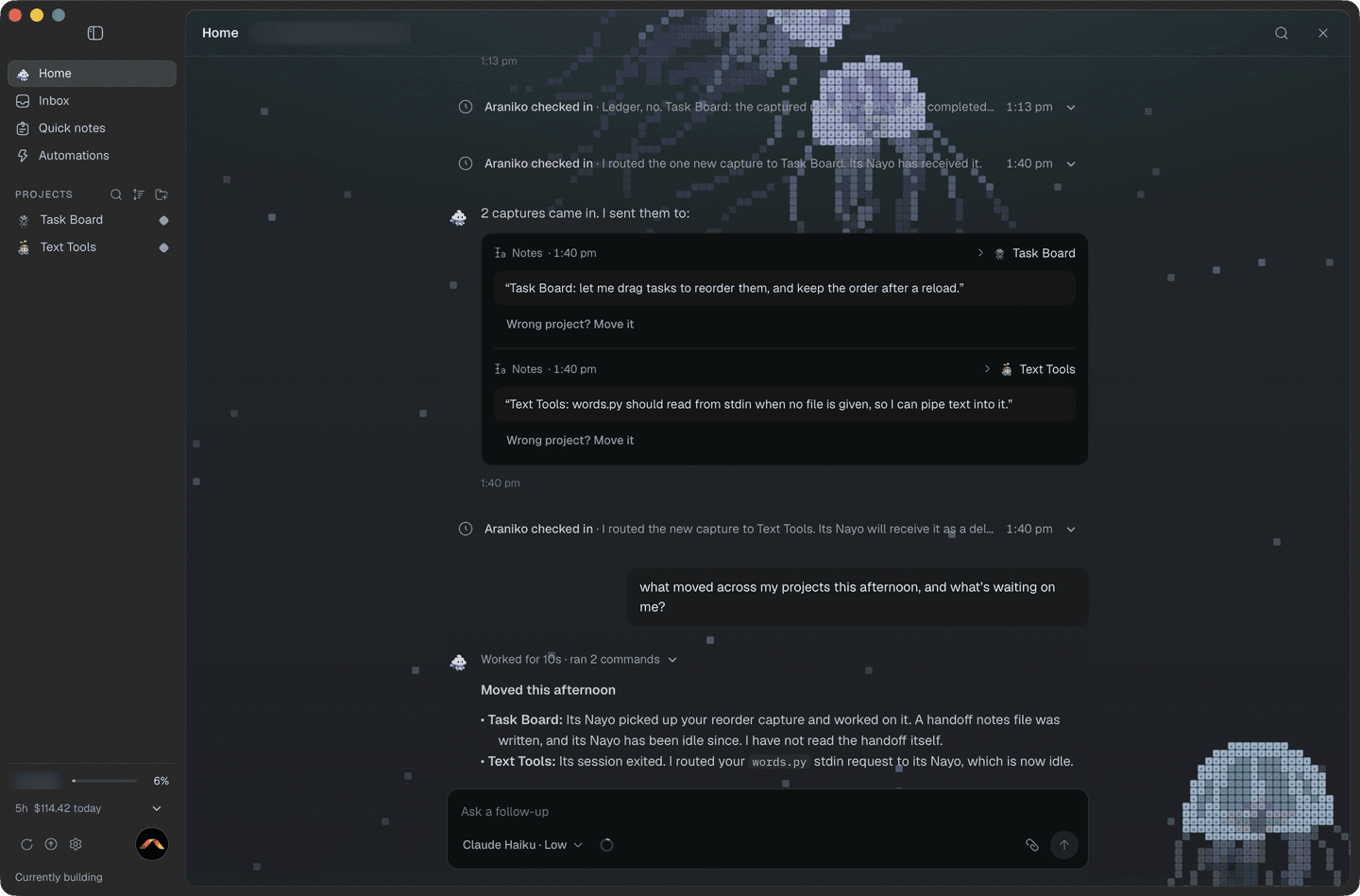
every project, one screen
captures filed to the right project
A day with it
No feature grid. This is what your day turns into once the agents have a boss that isn't you.
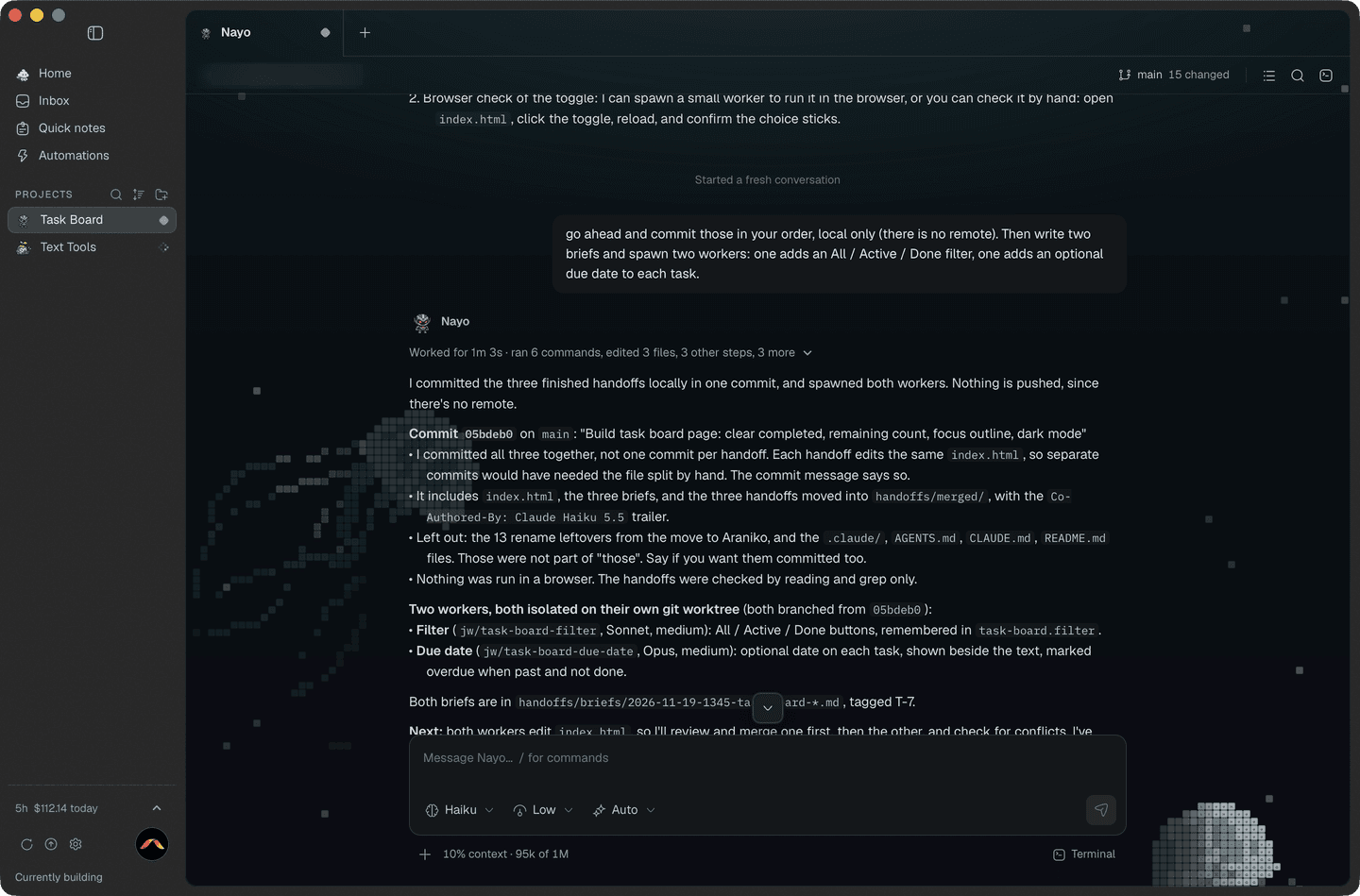
That's the whole standup. Nayo, the lead agent on the project, turns it into briefs and hires a worker for each one. Different models for different jobs. All of them at once.
Workers don't interrupt you. They ask Nayo, Nayo batches it up, and one clean question slides out of your MacBook's notch. Tap an answer from whatever app you're in. It goes back up. You never saw a terminal.
Select the text in Mail, in Slack, anywhere. Tap Shift twice. It lands in Capture, gets filed to the right project, and that project's Nayo picks it up. You went back to your coffee four seconds ago.
Araniko, the agent above all your projects, keeps the big picture: what's moving, what's stuck, what came in while you ate. Whatever you captured gets filed to the right project. One screen. All of it.
Every worker is a real CLI in a real terminal. Open one, read along, type into it if you must. Most days you won't, and that is the entire point.
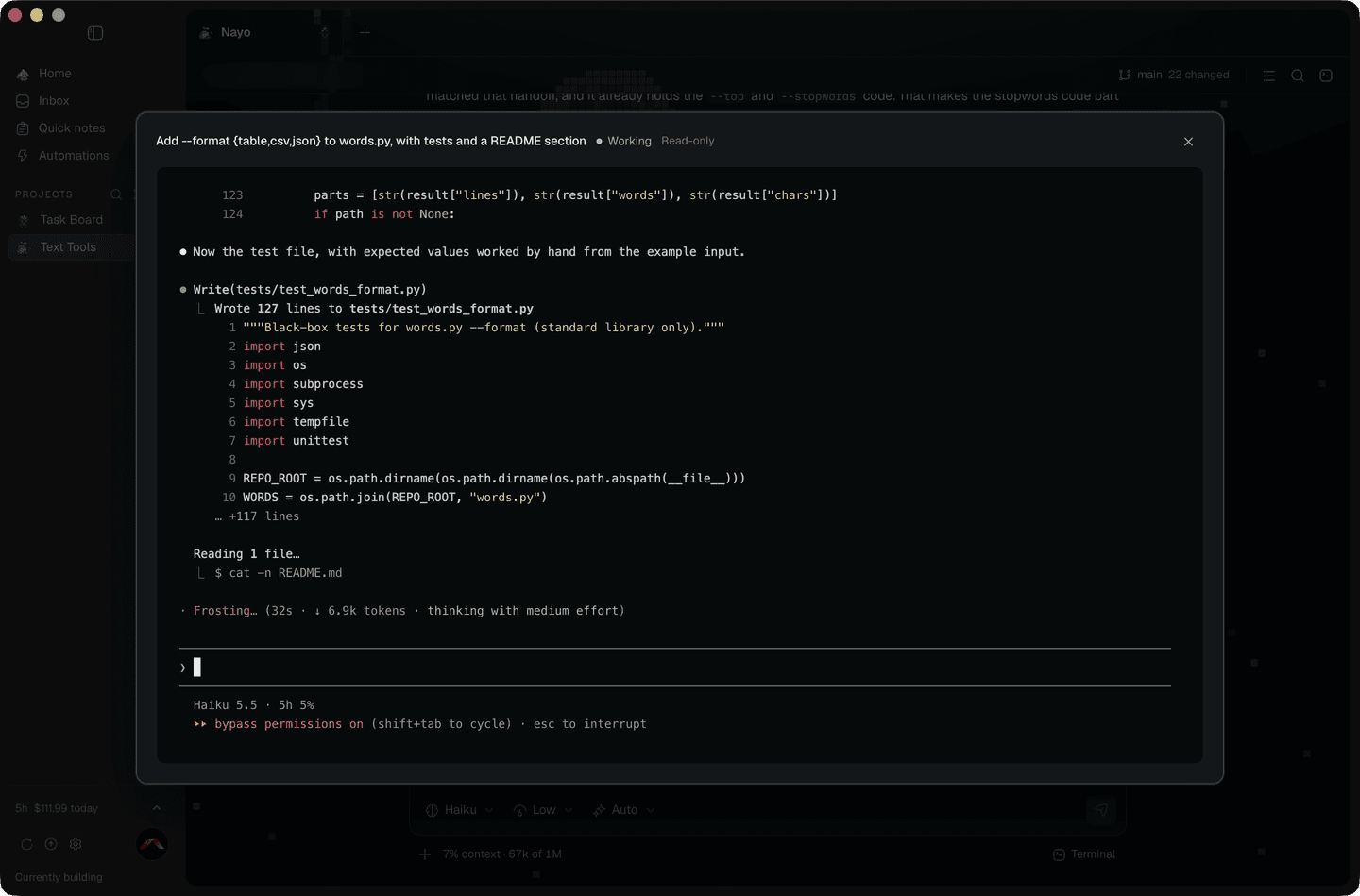
Here's the receipt. An ordinary day, not a benchmark. Yours will have different numbers and the same last line.
The cast
It's an org chart. You're at the top of it for once.
above everything
One agent across all your projects. Priorities, the capture inbox, who gets how much of your budget.
You talk to it sometimes
one per project
The lead. Plans the work, writes the briefs, hires the workers, reviews what they hand back, merges it.
You talk to it all day
as many as it takes
Claude Code, Codex, OpenCode, Grok. One brief each. They build it, hand it off, and leave.
You talk to them never, ideally
Fine print
Your repos, your terminals, your machine. Araniko is an app, not a place you upload your code to.
It drives the CLIs you already use: Claude Code, Codex, OpenCode, Grok. Araniko doesn't sell you a model.
Nothing is simulated. Every worker is a live session you can open, read and type into.
It watches your plan's usage window and moves work to lighter models before you hit the wall.
Workers ask Nayo. Nayo batches. You get one clean ask instead of a wall of blinking tabs.
Nayo reviews each handoff, commits, merges and ships. You look at the parts that matter.
FAQ
No. Araniko drives the agent CLIs you already have, on the plans you already pay for. It doesn't sell you a model.
No. Every worker is a real terminal session. Open it, read along, type into it. Araniko just means you don't have to.
Claude Code, Codex, OpenCode and Grok. Mix them in one project and give each brief to whichever suits it.
The opposite. Workers aren't allowed to ask you anything. They ask Nayo, and Nayo only comes to you when it's a real decision.
Apple silicon, on macOS. That's the whole list for now.
It's the app's default backdrop. There's also a trench with a manta ray, a night garden with a luna moth, and some sharks. We could say it stands for calm orchestration. Really, we just like it.
They aren't smarter than you. They just stopped watching terminals.
macOS · Apple silicon · version 2.9.1